The Hidden Cost of Buying “More House” Than You Need
When you're buying a home, it's very easy to start thinking that more is better. More square footage, more bedrooms, a bigger yard, an extra living area, a larger garage. If two homes are within your budget and one gives you significantly more space, choosing the bigger one can feel like the obvious decision.
Sometimes it is. If your current home feels crowded, your family is growing, you work from home, or you regularly need space for guests, having more room can make everyday life considerably easier. There are plenty of good reasons to prioritize square footage.
But there's another side to buying a larger home that doesn't always get as much attention during the search. You're not just buying more square footage. You're also taking responsibility for everything that comes with it.
More space has to be furnished, cleaned, heated, cooled, maintained and eventually repaired. A larger yard has to be cared for. Extra rooms tend to accumulate extra things. And sometimes buyers discover that the additional space they were so excited to get isn't space they actually use very often.
This isn't an argument for buying the smallest house you can find. It's an argument for buying the amount of house that actually makes sense for your life rather than automatically assuming that the biggest home your budget allows is the best value.
More Square Footage Isn't Automatically More Usable Space
One of the first things buyers look at in a listing is square footage, and it makes sense. It's an easy way to get a general idea of the size of a home before deciding whether you want to see it.
What that number doesn't tell you is how well the space is used.
Two homes with similar square footage can feel completely different in person. One might have an efficient layout with generous bedrooms, good storage and living spaces your household would use every day. Another might devote a significant amount of space to oversized hallways, a formal living room you don't need, or bonus areas that look impressive but don't serve a real purpose for you.
This is why I would rather see a buyer focus on usable space than simply chase a square-footage number.
Think about the rooms you use most in your current home. Where does everyone naturally gather? What feels cramped? What do you genuinely wish you had more room for? Then think about the spaces you rarely use. If you already have a dining room that sits empty most of the year, having an even larger formal dining room in your next home probably isn't going to improve your daily life.
Sometimes a thoughtfully designed smaller home can feel much more comfortable than a larger one because the space is where you actually need it.
You're Buying the Space, but You'll Also Have to Fill It
One expense that's easy to underestimate when moving into a larger home is furnishing it.
You don't have to fill every room immediately, of course. Most people build their homes over time. But if you're moving from a significantly smaller house or apartment, you may be surprised by how quickly the list grows.
Maybe your existing sofa looks tiny in the new living room. You suddenly need another bed because you have a guest room. The larger dining area makes your current table feel out of place. There are more windows that need blinds or curtains, another bathroom that needs towels and storage, and an entire bonus room that you haven't quite figured out what to do with yet.
Individually, none of these purchases may seem like a major expense. Collectively, they can become one.
This is especially important to think about around the time you're buying because you've likely already had several significant expenses associated with the purchase and move. Even buyers who are financially well prepared can be surprised by how many little purchases come with getting settled into a new home.
There's nothing wrong with wanting those extra rooms. I just want buyers to think about whether they actually want to use them rather than feeling like they're getting a better deal simply because they're getting more square footage.
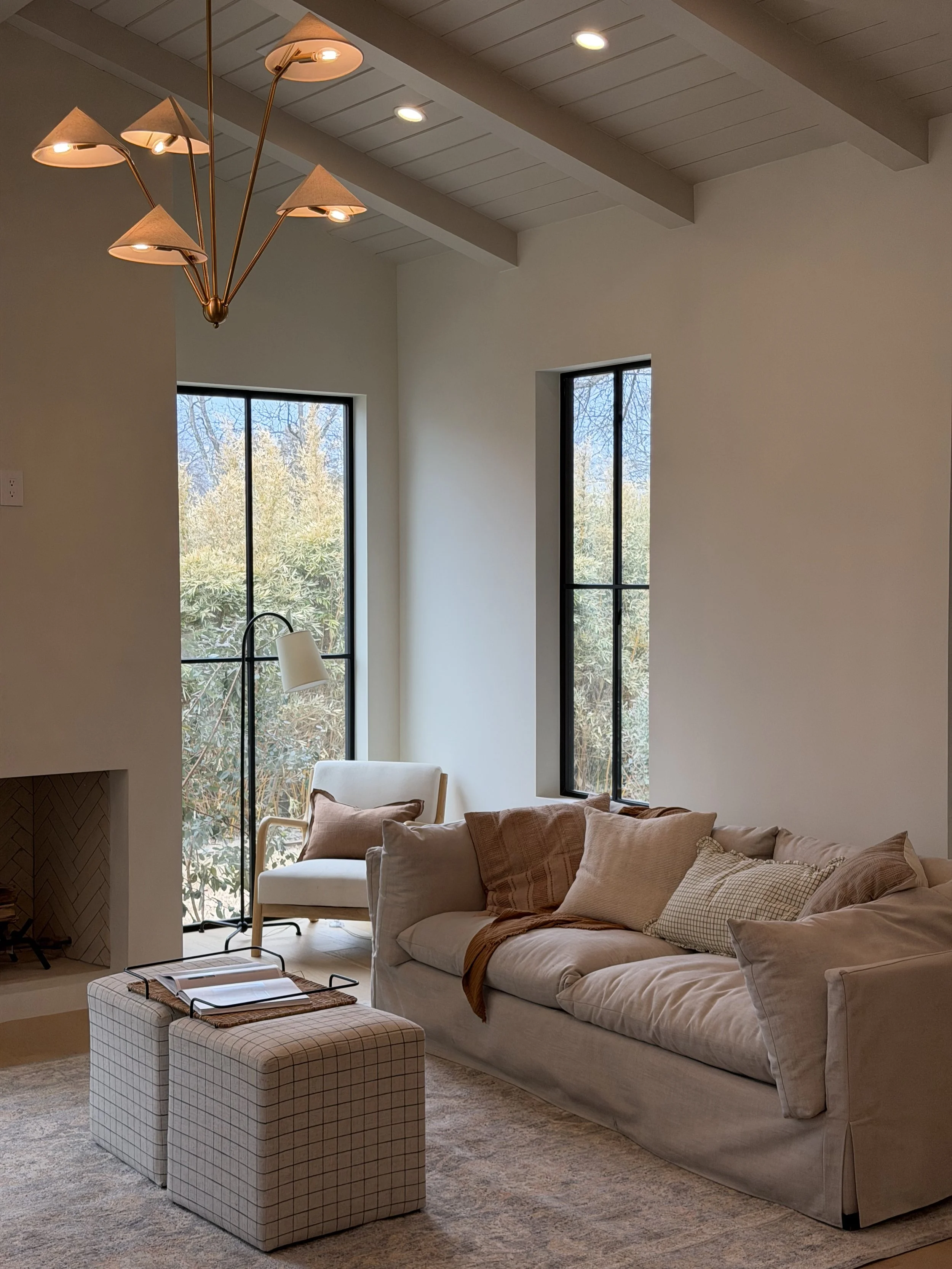
More space can be wonderful when it serves a purpose in your everyday life. Before automatically choosing the bigger house, think about what that extra square footage will add — and what it will require from your budget, time and energy.
A Bigger Home Has More to Maintain
Every home requires maintenance. That's part of homeownership regardless of whether you buy 1,500 square feet or 3,500.
But as a general rule, more house means more things to take care of.
There are more rooms to paint eventually, more flooring to replace someday, more windows to maintain and more space to keep clean. Depending on the property, a larger home may also have additional systems, fixtures or features that require attention over time.
The same principle applies outside.
A big yard can be wonderful if you enjoy spending time outdoors, want room for children or pets, love gardening, or simply appreciate having more space between you and your neighbors. But that yard also needs to be mowed, landscaped and maintained.
That may be exactly what you want. Some people genuinely enjoy spending a Saturday working in the yard. Others would rather be doing almost anything else.
Neither preference is right or wrong. What matters is being realistic about which one sounds like you.
When you're touring a property, don't just picture yourself enjoying the backyard from the patio. Picture an ordinary summer weekend when the grass needs to be cut. Look at the landscaping and think about whether it's something you'd enjoy maintaining yourself or an expense you'd prefer to pay someone else to handle.
The goal is to understand the lifestyle that comes with the property, not just admire how it looks during the showing.
Monthly Expenses Don't Stop at the Mortgage
The purchase price understandably gets most of the attention during a home search. Buyers know their budget, look at homes within a certain price range and work with their lender to understand what their financing and estimated monthly payment could look like.
But your mortgage payment isn't the only expense associated with owning a home.
A larger home may cost more to heat and cool simply because there is more space to keep comfortable. Water usage can vary depending on the property and household. If the home has features such as a pool, extensive landscaping or other amenities, those can bring additional ongoing expenses as well.
Then there are the normal costs of maintenance and repairs that come with homeownership. They don't necessarily happen on a predictable schedule, which is exactly why having some financial breathing room after you buy can be so valuable.
I don't want buyers to think only about whether they can afford the payment they're being quoted. I want them to think about whether the overall cost of owning that particular home feels comfortable alongside everything else they want their money to do.
You still want to save. You may want to travel. You may have kids' activities, hobbies, dinners out, retirement goals or a hundred other priorities that have nothing to do with your house.
Being approved to spend a certain amount doesn't mean you have to spend it.
Sometimes the home that leaves you with more room in your monthly budget can give you more freedom than the home with an extra thousand square feet.
Extra Rooms Have a Way of Becoming Extra Storage
There's another funny thing that tends to happen when we have more space: we fill it.
A bonus room starts as an empty room you aren't sure what to do with, and a few years later it somehow contains furniture, holiday decorations, boxes you haven't opened since the move and several things you forgot you owned.
Closets fill up. Cabinets fill up. Garages fill up.
This isn't a character flaw. It's just very easy for our belongings to expand into the space available to us.
That's one reason I like buyers to think in terms of purpose when they're evaluating a larger house. Instead of simply thinking, "This has two extra rooms," think about what those rooms would actually be used for.
Maybe one will be a home office you use every day and the other will give your kids a much-needed second living space. Great. That square footage has a purpose.
But if you're mentally assigning names to rooms because they're there rather than because you need them, it may be worth asking whether you'd rather put your money somewhere else.
You don't have to justify every square foot of your house. Sometimes it's simply nice to have extra space. But knowing the difference between space you'll enjoy and space you'll feel responsible for can help you make a much more intentional decision.
Think About the Season of Life You're Buying For
This is where I think home buying becomes especially personal.
You don't want to buy only for your life today if you know significant changes are coming. If you're planning to grow your family, start working from home, have a parent move in, or expect another foreseeable change, it makes sense to consider how the home could accommodate that.
At the same time, you don't necessarily have to buy a home for every hypothetical version of your life twenty years from now.
Sometimes buyers stretch their budget for extra bedrooms because family might visit a few times a year. They want an enormous dining space because they might host Thanksgiving someday. They buy a much bigger yard because it feels like something they're supposed to want, even though they've never particularly enjoyed yard work.
There's a balance between planning ahead and paying today for a future you may never actually live.
I think a better question is whether the home works for your life now and for the future you can reasonably see coming.
You don't need to predict everything. You just need to make a decision that gives you enough flexibility without making your current life unnecessarily expensive or complicated.
More House Can Be Exactly the Right Choice
I also don't want this conversation to swing too far in the other direction.
Sometimes more house really is what you need.
If you're constantly tripping over each other in your current home, another living area could completely change how your household functions. If you work from the kitchen table every day, a dedicated office might be worth every penny. If you regularly host family, an actual guest room may get plenty of use. If you have three teenagers sharing one bathroom, I'm probably not going to try to convince you that less space builds character.
The point isn't that large homes are wasteful or that everyone should downsize.
It's that more only has value when it adds something meaningful to your life.
An extra bedroom you use every day is valuable. A larger kitchen that makes cooking easier for your household is valuable. More storage that solves an ongoing frustration is valuable. A backyard where your family spends every evening may be one of your favorite things about your home.
Those are very different from buying extra space simply because you can.
Buy the House That Fits Your Life, Not Just Your Budget
One of the things I want my buyers to feel comfortable doing is looking below the top of their price range.
If you're approved up to a certain amount, that number is a ceiling. It isn't a shopping requirement.
There can be a lot of freedom in finding a home that gives you what you genuinely need while leaving room in your budget for the rest of your life. Maybe that means choosing a little less square footage. Maybe it means skipping the bonus room you weren't sure you'd use anyway. Maybe it means choosing a smaller yard because you'd rather spend your weekends traveling than maintaining it.
Or maybe you look at your life and decide that you really do need the bigger house.
That's okay, too.
I don't want to decide that for you. I want to help you think through what you're actually buying so you can decide whether it's worth it.
Because when you're touring homes, it's very easy to be impressed by more. More rooms. More space. More land. More features.
But the best home isn't necessarily the one that gives you the most.
It's the one that gives you the right amount for the life you actually want to live.
