When a House Checks Every Box but Still Doesn’t Feel Right
You know the house. It has the right number of bedrooms, the kitchen is updated, there's plenty of storage, the backyard works, and it's within the budget you've discussed with your lender. On paper, it looks like exactly what you've been searching for.
Then you walk through the front door and...nothing.
There's no obvious problem. You can't point to one specific thing you dislike. In fact, as you walk from room to room, you keep reminding yourself of all the reasons you should love it.
So why don't you?
This can be one of the more confusing parts of buying a home, especially if you've already seen several houses that didn't meet your needs. When one finally checks nearly every box, it can feel almost irresponsible to walk away simply because something doesn't feel quite right.
I'm not suggesting that buyers make one of the biggest financial decisions of their lives based entirely on a feeling. But I also don't think you should ignore your reaction to a home simply because the numbers on your wish list line up.
Sometimes that hesitation is telling you something worth figuring out.
Your Checklist Is a Starting Point, Not the Entire Decision
Before you begin looking at homes, having a list of priorities is incredibly helpful. It gives us a way to narrow the search and focus on properties that have a reasonable chance of working for you. If you need three bedrooms, want a fenced yard and know you need a dedicated workspace, those are useful criteria.
The problem is that a checklist can only describe so much about a house.
It can tell you that the home has four bedrooms, but not whether those bedrooms are where you'd want them. It can tell you there are 2,000 square feet, but not whether that space feels functional. It can tell you there's a two-car garage, but not whether the transition from the garage into the house makes sense for your everyday routine.
A home is more than a collection of individual features. Those features have to work together in a way that makes sense for the people who will actually live there.
That's why I don't want buyers treating the wish list like a scorecard where the house with the most checkmarks automatically wins.
The list gets us through the front door. What we learn once we're inside matters just as much.
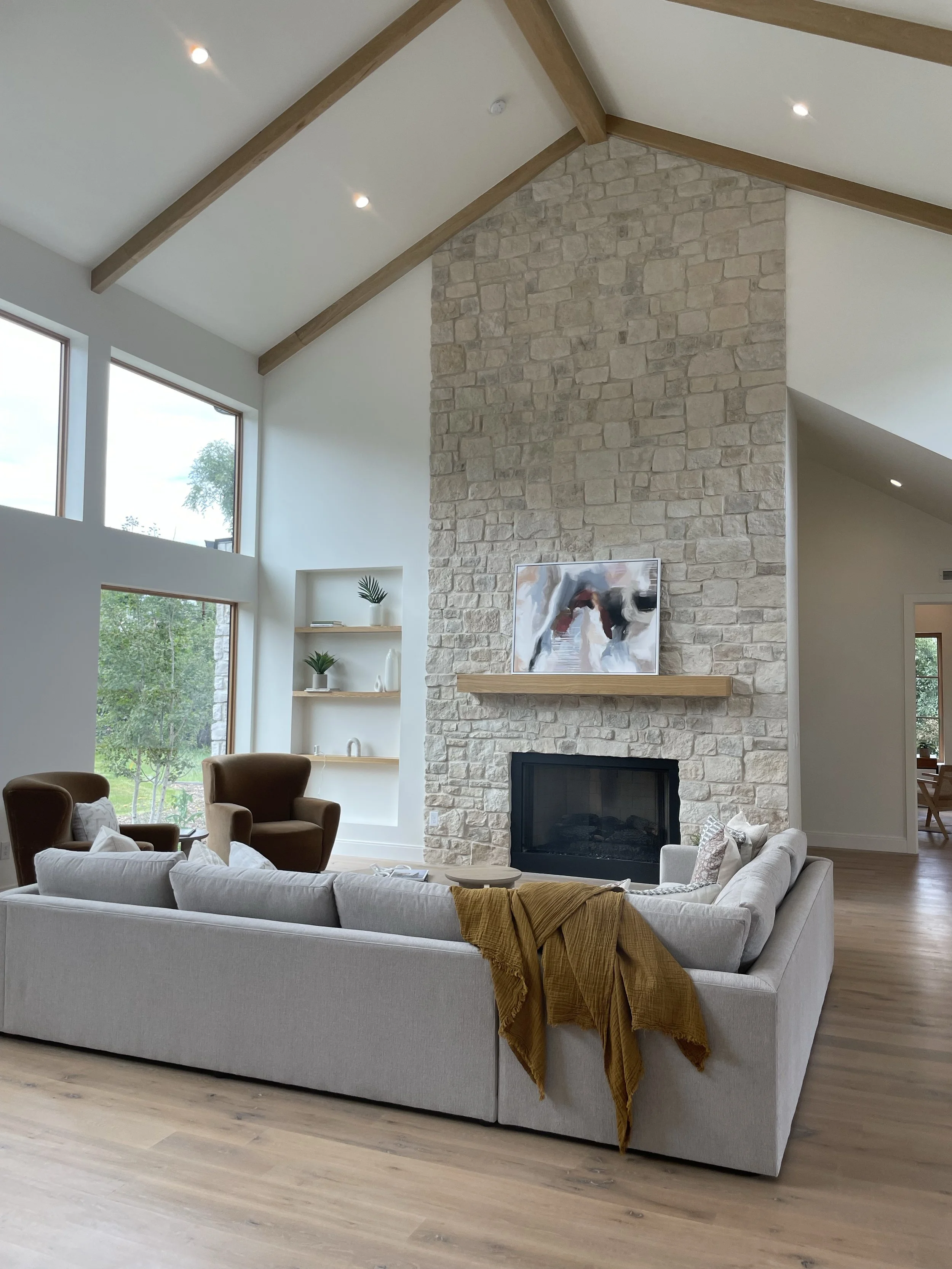
A home can have everything you asked for on paper and still not be the right fit. Your checklist helps guide the search, but walking through the door is where you start learning what truly matters to you.
Try to Figure Out What’s Behind the Feeling
When a buyer tells me, "I don't know why, but I just don't love it," I think that's the point where we should get curious rather than immediately dismissing the reaction.
Maybe it's the layout. Each individual room is a good size, but the way they connect feels awkward. Maybe there's less natural light than you expected, or the ceilings make the rooms feel more closed in. The kitchen may technically have everything you wanted, but once you're standing in it, you realize the workspace doesn't make sense for the way you cook.
Sometimes it's even simpler. You may realize the house feels like more space than you want to maintain, or the backyard isn't as usable as it looked online. Maybe you thought an open floor plan was a must-have until you stood in one and realized you'd actually prefer a little more separation.
None of these things necessarily show up in your original search criteria.
That's one of the reasons touring homes is so valuable. You aren't just evaluating properties. You're also learning more about what you actually want.
Don't Confuse “Not My Style” With “Not My House”
There is one place where I do want buyers to challenge that initial reaction a little.
Sometimes a house feels wrong because it doesn't look like you.
Maybe the seller loves dark colors and you prefer everything light and bright. Their furniture is completely different from yours. The kitchen cabinets aren't the color you've been picturing, or the light fixtures make the whole home feel dated.
Those things can create a surprisingly strong emotional response, even when the house itself might work beautifully for you.
Before you eliminate a home because it doesn't immediately feel like yours, try to mentally remove the current owner's style. Imagine the rooms empty. Picture your furniture instead of theirs. Think about what a different paint color or lighting could do to the space.
If the underlying layout, size, location and functionality work, a home doesn't necessarily need to feel like "you" on the day you tour it. Sometimes it becomes yours after you move in and start making it your own.
At the same time, you shouldn't have to mentally renovate every room just to convince yourself you could be happy there. There's a difference between seeing potential and forcing it.
You Don't Have to Talk Yourself Into a House
This is probably the biggest thing I want buyers to remember.
When you've been searching for a while, there's a temptation to become overly practical about a house that seems like it should work. You start listing all of its good qualities to yourself: the price is right, the kitchen is nice, the bedrooms are big enough, the yard is fine. Maybe you tell yourself you're being too picky or that you should be grateful to have found something that meets so many of your criteria.
But buying a home isn't about winning an argument with yourself.
There will almost always be compromises, and I'm never going to tell a buyer to wait around for a mythical perfect house where every detail is exactly right. At some point, you have to decide which things matter and which things you're willing to let go.
Still, there's a difference between making a reasonable compromise and repeatedly trying to convince yourself that you like a home more than you actually do.
If you're standing in a house building a case for why you should want it, that's worth noticing.
Sometimes the “Almost Right” House Teaches You the Most
Even if you decide a house isn't the one, a showing is rarely wasted if it helps clarify what you're looking for.
Maybe you walk away realizing natural light matters much more to you than you thought. Maybe you discover that you don't actually want the huge open floor plan you've been requesting. Perhaps the house has a primary bedroom on the opposite side of the home from the other bedrooms, and seeing that arrangement in person helps you realize whether you love it or hate it.
Those discoveries can make the rest of your search much more focused.
Your wish list at the beginning of the process is based largely on what you think you want. Your wish list after you've toured several homes is based on experience. That's usually a much better list.
I don't consider it a problem when a buyer's priorities change during the search. In many cases, it means we're getting closer.
The Right House Has to Work on Paper and in Real Life
I don't believe you need fireworks when you walk through the door of the right house. Some buyers know immediately, while others need time to think, compare and come back for another look.
Both are completely normal.
What I want is for the practical side and the personal side to eventually meet.
The house should make sense for your needs, your budget and your everyday life. But you should also be able to picture yourself living there without having to work too hard to make the idea fit.
Sometimes the home that looks perfect online isn't the one.
Sometimes the house you weren't sure about becomes a favorite once you see it in person.
And sometimes a house checks almost every box and still isn't right for you.
That's okay.
Our job isn't to find the house with the highest score on your checklist. It's to use that checklist to help us find a home that works when you're actually standing inside it.
Because at the end of the search, I don't just want you to be able to say, "It has everything I asked for."
I want you to be able to say, "I can see myself living here."
