The House You Almost Didn’t See: Why Listing Photos Don’t Tell the Whole Story
Most home searches start online now, which means your first impression of a house usually happens long before you ever walk through the front door. You scroll through the photos, look at the kitchen, check out the primary bedroom, swipe through the backyard and make a pretty quick decision about whether the house deserves a spot on your showing list.
Sometimes that decision is easy. You see a house and immediately know it isn't going to work. Maybe it doesn't have enough bedrooms, the layout clearly doesn't fit what you need, or there's another feature that's genuinely non-negotiable for you.
But sometimes the reason a house gets eliminated is much simpler: the pictures just aren't very good.
Maybe the rooms look dark. The furniture is distracting. The photos make the living room seem smaller than you expected. The kitchen isn't styled beautifully, or the paint colors aren't your taste. Meanwhile, another listing has bright professional photography, perfectly arranged furniture and a kitchen that practically begs you to save it.
It's completely natural to be more interested in the second house.
The problem is that you're not buying listing photos.
You're buying the house.
And every once in a while, the house you almost scrolled past turns out to be completely different once you see it in person.
Some Homes Simply Photograph Better Than Others
Photography can have a huge impact on how we perceive a space. Lighting, camera angles, furniture placement and even the time of day the photos were taken can change the way a room looks on a screen. A bright, professionally photographed home may immediately feel more inviting, while another property with darker or less polished photos may struggle to get your attention even if the actual home has plenty to offer.
There are also certain layouts that are simply difficult to understand through photographs. You may see individual pictures of the kitchen, dining area and living room but have no idea how those rooms connect until you're standing inside the house. A bedroom might appear small because of the camera angle or the furniture currently inside it. An empty room can be difficult to judge because there's nothing there to give you a sense of scale. On the other hand, certain photography techniques can make a room appear larger than it feels in person.
None of that means listing photos aren't useful. They are incredibly useful, especially when you're trying to narrow down dozens of possibilities into a manageable showing list. I just don't want buyers treating them as a perfect representation of what it will feel like to actually stand inside the home.
Think of the photos as an introduction. They can help you decide whether a property has enough potential to investigate further, but they can't tell you everything you need to know.
A Beautifully Staged Home Has an Advantage
There's a reason staging can be so effective. When a room is clean, uncluttered and thoughtfully furnished, it's easier to understand how the space could be used. It also helps buyers picture a lifestyle rather than simply looking at four walls.
The challenge is remembering that you're responding to both the house and its presentation.
Maybe the seller has furniture that fits the living room perfectly, neutral decor, beautiful bedding and almost nothing sitting on the countertops. The home photographs beautifully because everything in the pictures has been intentionally arranged to make the property look its best.
Another seller may simply be living a very normal life in their home. There are toys in the corner, family photos everywhere, an oversized sofa in the living room and a dining table that isn't your style. The house may feel busier in the pictures, even though the actual room dimensions and layout could work beautifully for you.
That's where buyers have to practice looking through someone else's belongings and taste. You aren't buying their sofa, their curtains or their decorating choices. Once they move out, you're getting the rooms themselves.
Try to look at the things that will remain. Look at the windows, the room dimensions, the amount of wall space, the placement of doors and the way the rooms connect. Look at the kitchen layout instead of only the cabinet color. Look at the bedroom size rather than the seller's bedding.
Sometimes the home with the less impressive presentation is hiding a much better fit underneath it.
Photos Can't Show You How a House Flows
This is probably one of the biggest limitations of shopping for a home online.
Photos show you rooms. They don't always show you the experience of moving between them.
You can look at twenty photographs of a house and still not fully understand how the front door relates to the living room, whether the kitchen feels connected to the main living space, how far the primary bedroom is from the other bedrooms, or whether there are awkward hallways or transitions between rooms.
Even when a listing includes a floor plan, there's a difference between seeing that arrangement on a screen and physically walking through it.
I've seen homes where the photos didn't particularly stand out, but the layout made much more sense in person. I've also seen the opposite happen: a home can photograph beautifully room by room, but once you're inside, the flow doesn't work as well for what a buyer needs.
That's why I put so much emphasis on functionality when we're touring. How a home feels as you move through it is part of what you're buying, and that can be difficult to capture in a gallery of still images.
If a house meets your major criteria on paper and you're only hesitating because the photos aren't exciting, it may still be worth seeing.
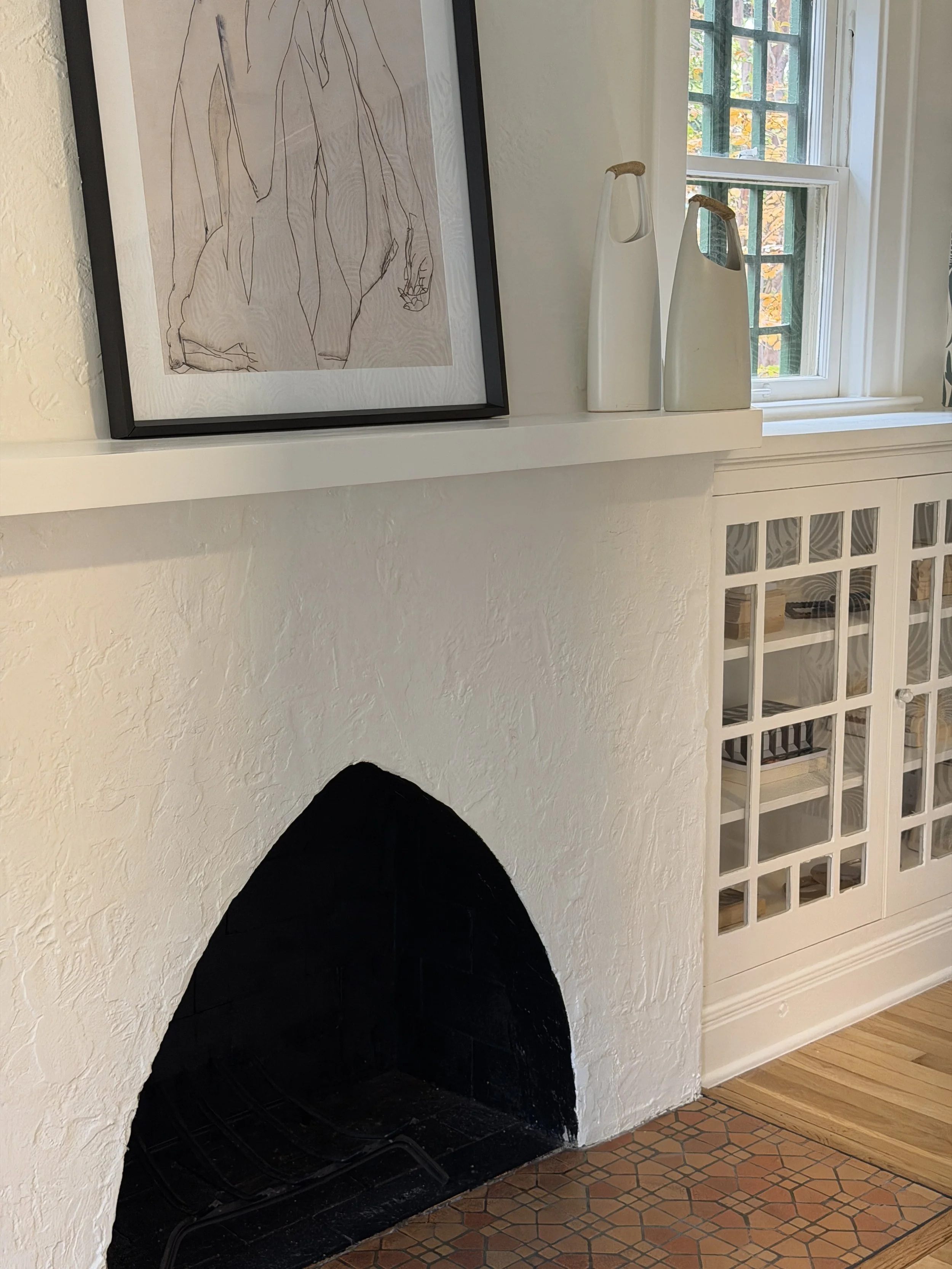
Listing photos can help you narrow down your search, but they can't tell you exactly how a home will feel in person. If a house checks the important boxes but the pictures leave you unsure, sometimes it's worth stepping through the front door before you decide.
Don't Let Someone Else's Style Make the Decision for You
This is another place where online home shopping can get tricky.
We all have preferences. Maybe you love light, neutral interiors. Maybe you prefer warm wood tones. Maybe you know immediately that you're going to want to change gray flooring or dark paint.
When you're scrolling quickly through listings, homes that already match your personal style naturally rise to the top.
But style and suitability aren't the same thing.
A house can be decorated beautifully and still have a floor plan that doesn't work for you. Another house can have paint colors you dislike and a kitchen that isn't your dream aesthetic while offering exactly the amount of space, storage and functionality you've been trying to find.
This doesn't mean you should pretend renovations and cosmetic updates don't matter. If you know you don't want a project, a home requiring significant changes may genuinely not be the right fit. Even cosmetic projects cost money, and there's a big difference between repainting a bedroom and replacing flooring throughout an entire house.
But if the things turning you off are relatively easy to change, it's worth separating those from the house itself.
Try asking yourself whether you'd feel differently about the listing if every room were painted a color you loved and all of the seller's furniture disappeared. If the answer is yes, you may be reacting more to the presentation than the property.
The Opposite Can Happen, Too
Just as mediocre listing photos can undersell a good house, beautiful listing photos can sometimes set expectations a little too high.
You may save a listing immediately because every room looks enormous, bright and perfectly styled. Then you walk through the front door and realize the living room feels smaller than you expected, the kitchen has less storage than you assumed or the layout looks very different from what you pictured.
That doesn't mean anyone did anything wrong. Good real estate photography is supposed to present a property well. The photographer is going to choose flattering angles, good lighting and compositions that help buyers understand the space.
The important thing is simply remembering that photos are a marketing tool, not a substitute for seeing the property.
This is why I don't want my buyers becoming too emotionally invested in a house before we tour it. It's fine to be excited about a listing, but let's see how it feels in person before we mentally move in.
The house you're convinced is "the one" from the photos may not be. And the house you agreed to see only because it checked the practical boxes may surprise you.
That's part of why showings matter so much.
Use the Listing to Decide Whether a Home Has Potential
I'm not suggesting that buyers should tour every house within their price range just because photographs can be misleading. Your time matters, and one of the benefits of online listings is that we can eliminate properties that clearly don't meet your needs before spending an afternoon driving all over town.
Instead, I think the goal should be to use the information in the listing a little differently.
Start with the things that actually determine whether a property could work for you. Does it have the number of bedrooms and bathrooms you need? Is the general size appropriate? Does the property type fit what you're looking for? Is it within the area you're considering? Is the price within the range you've discussed with your lender? Are there obvious features that would make the home a definite no?
Once those basics make sense, look at the photos.
If you love them, wonderful. Let's go see whether the house lives up to them.
But if you don't love them, figure out why before automatically eliminating the property.
If the reason is, "The kitchen is much smaller than I need," that's useful information.
If the reason is, "I hate that green wall," we probably shouldn't let a can of paint make the decision for us.
The more clearly you understand your actual priorities, the easier it becomes to distinguish between a house that doesn't work and a house that simply doesn't photograph in a way that appeals to you.
Give the “Maybe” House a Chance
Some of my favorite moments during a home search happen when a buyer walks into a property they weren't particularly excited about and says, "Oh. This is much better than I thought."
There's something about standing inside a house that no listing can completely replicate. You can see how much natural light actually comes through the windows. You can understand the scale of the rooms. You can walk from the kitchen to the living room instead of trying to piece the layout together from separate photographs. You can look out the windows, stand in the backyard and begin to understand how the property would actually feel to live in.
Sometimes you'll walk through the house and confirm exactly what you thought from the photos. It isn't right for you, and that's perfectly fine. We learned something and move on.
But sometimes the "maybe" house becomes the one you're comparing everything else to.
That's why, when a property meets the important criteria and there's nothing obvious telling us it won't work, I don't mind giving it a chance.
A showing costs you a little bit of time. Eliminating the right house because the pictures weren't Pinterest-worthy could cost you an opportunity you didn't realize you had.
Let the Photos Get You Interested, Not Make the Decision
Online home shopping is incredibly convenient, and listing photos are one of the best tools buyers have for narrowing down their options. I absolutely want you looking at them, studying the spaces and paying attention to what you see.
I just don't want the photos making the entire decision for you.
A listing can't tell you exactly how the home will feel when you walk through the door. It can't fully communicate the flow of the floor plan or show you how the natural light changes throughout the space. It can't tell you whether a room that looked small online actually feels perfectly comfortable in person.
And perhaps most importantly, listing photos can't always help you separate the house from the way the current owner lives in it.
That's something we can do when we walk through together.
So when you're searching for your next home, save the ones that immediately catch your eye. Send me the ones you can't stop thinking about. Get excited about the beautiful kitchens and the gorgeous backyards.
But don't be afraid to send me the "maybe" house, too.
The one that has the right location, the right amount of space and the features you've been looking for, even though the pictures aren't doing much for you.
Because sometimes the house you almost didn't see is the one you're really glad you did.
